

POI FEB RAS and IES VAST discovered new thermal water springs and a mud volcano in Central Vietnam
The joint team of the V.I. Il'ichev Pacific Oceanological Institute of the Far Eastern Branch of the Russian Academy of Sciences and the Institute of Earth Sciences of the Vietnam Academy of Science and Technology (VAST) conducted joint field and coastal work between September 22 and October 3, 2026, as part of the Russian Science Foundation project No. 24‑47‑04001 “Gas‑geochemical studies of thermal and mineral springs in the Red River fault zone (Northern Vietnam and adjacent water areas): studying the interaction of the lithosphere, hydrosphere, and atmosphere.”

A joint field unit. From left to right: Dr. Phung Van Phach, Ponomareva A.L., Shakirov R.B., researcher and Master's student Hoang Minh Duc
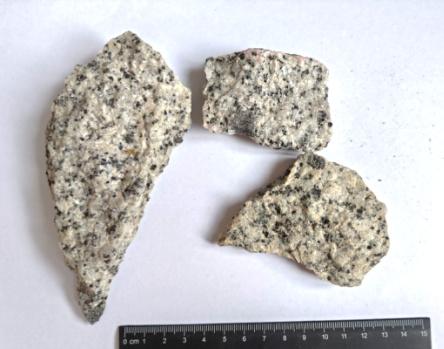
During the fieldwork, unique results were obtained. For the first time, samples were collected from thermal springs in Central Vietnam for gas geochemical and microbiological studies; field hydrochemical measurements were carried out; and samples of rock material from the host rocks were collected. A new source of thermal (possibly hydrothermal) waters was discovered at the foot of the Dalat Plateau (Langbian). According to local residents, there is an area in its vicinity with a very hot soil surface, which may indicate the existence of an active magmatic chamber. Samples of volcanic (basalt) and sedimentary (limestone) rocks were collected from the same area. Based on the initial survey, the thermal outflow has formed recently: the water flowing from it has begun to change the color of the surrounding soil. Active gas emission is observed from the source, the main component of which is carbon dioxide.


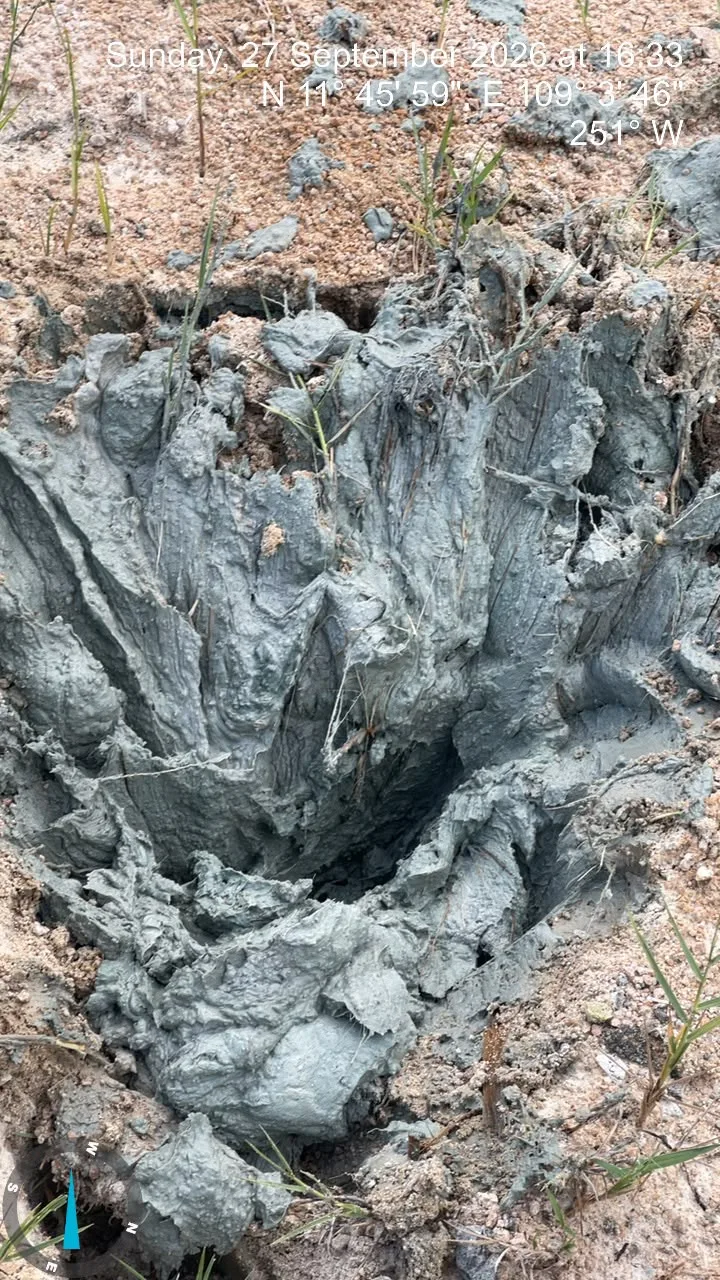
Currently, gas composition analyses have been carried out and isotope measurements are being conducted. An important result of the work in another area was the discovery of a structure that, based on all external and geological characteristics, corresponds to a mud volcano. Until now, mud volcanoes in Vietnam have not received sufficient attention, and the discovered object was studied for the first time by a joint team. According to local residents, similar objects exist in other areas as well. These findings are of great importance for the study of mud volcanism on the Indochinese Peninsula.
As a result of sampling thermal and other sources, elevated concentrations of methane, helium, carbon dioxide, and other substances that are of indicator significance for studying the sources of thermal waters and gas accumulations were detected for the first time. Particular attention is drawn to the abundant manifestations of microorganisms (in particular, extremophilic ones) and their activity. Samples of igneous and sedimentary rocks were also collected. The fieldwork carried out opened a new chapter and identified the prospects for developing comprehensive joint research in Vietnam.
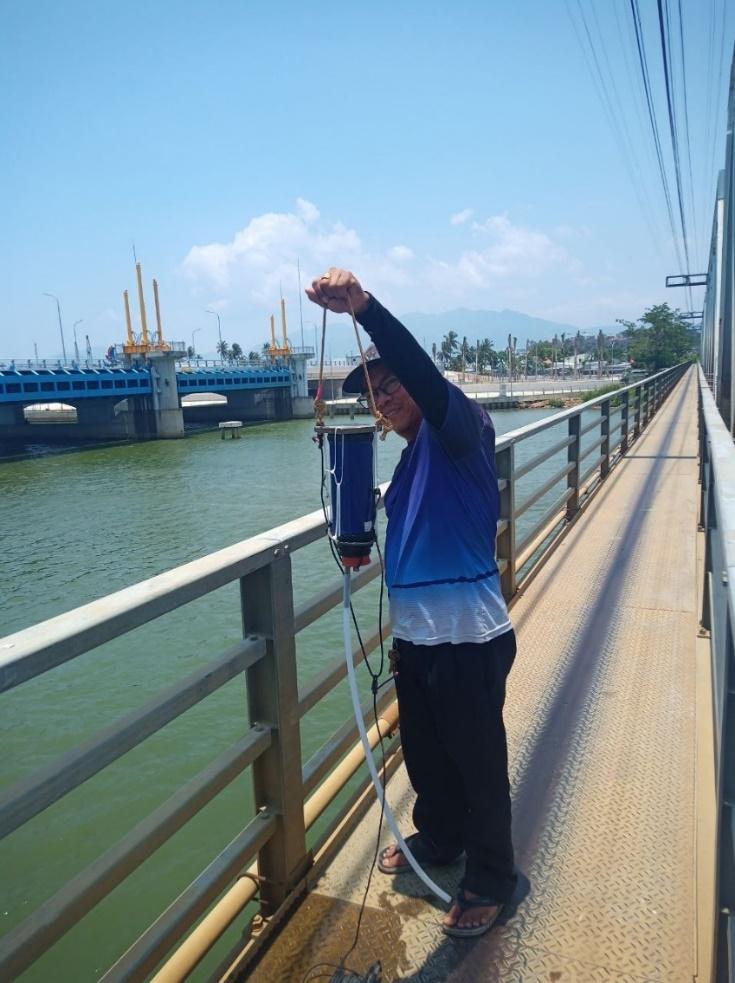
In order to carry out the project “Methane fluxes, vertical mixing and their impact on the ecology in the waters of Vietnam and the marginal seas of the western part of the Pacific Ocean” (No. 075-15-2025-644), gas‑geochemical studies were conducted at the river mouth in Khanh Hoa Province.