

THE 102ND CRUISE OF RV AKADEMIK M.A. LAVRENTYEV COMPLETED: NEW DATA OBTAINED ON GAS EMISSION AND DEEP STRUCTURE OF THE SEA OF OKHOTSK REGION
The Il’ichev Pacific Oceanological Institute of the Far Eastern Branch of the Russian Academy of Sciences (POI FEB RAS) sums up the results of the 102nd cruise of the research vessel Akademik M.A. Lavrentyev. The expedition took place from June 9 to July 11, 2026, in the eastern Sea of Okhotsk, near Paramushir Island. Due to a main engine failure, the vessel lost propulsion and was towed to the port of Vladivostok on July 11. Despite significant limitations, the scientific team managed to complete a substantial volume of the planned research in the eastern Sea of Okhotsk and obtained important preliminary results crucial for understanding the region's geodynamics and assessing its hydrocarbon potential.
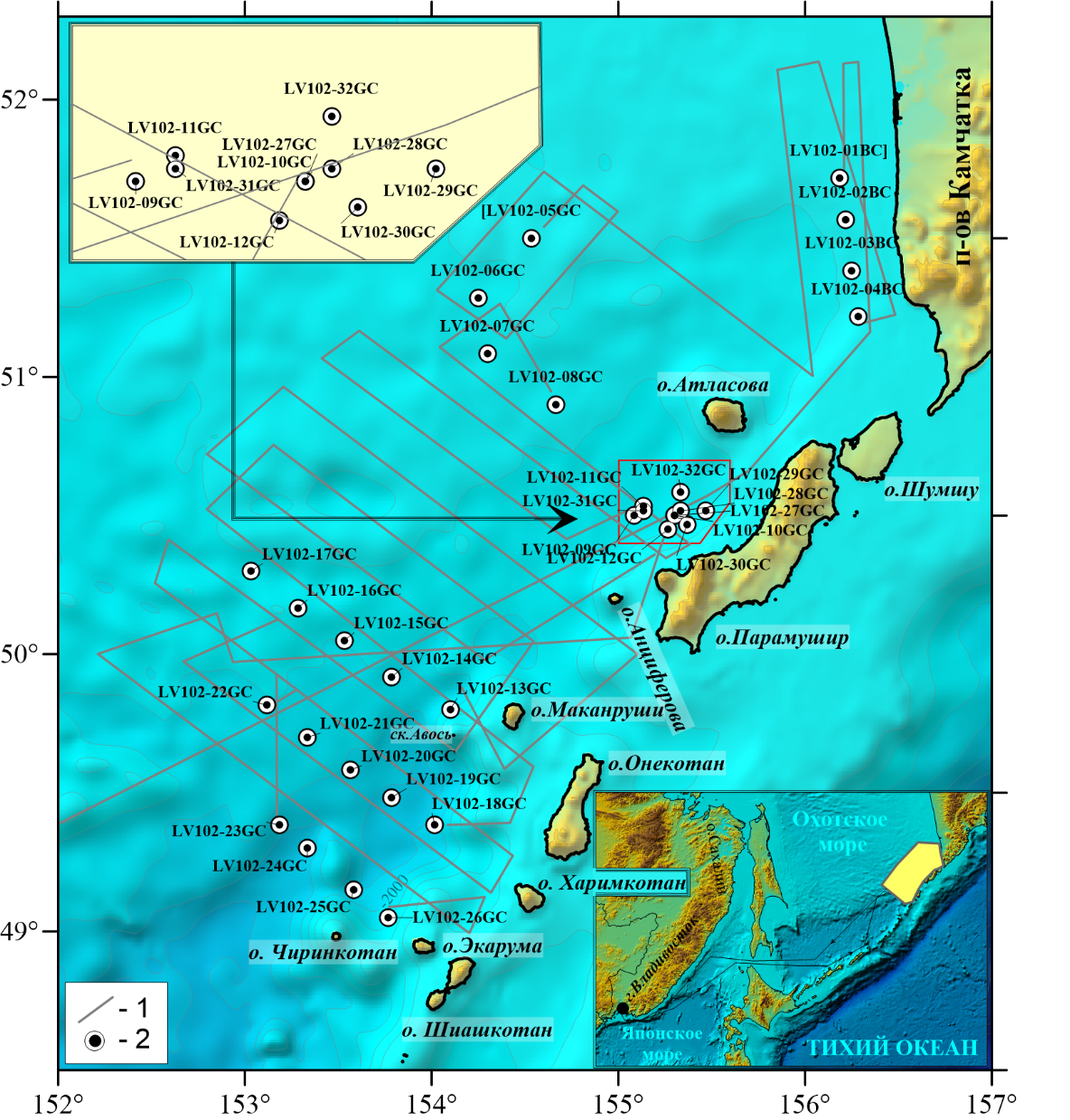
Schematic map of the research route and the study area location during the 102nd cruise of RV Akademik M.A. Lavrentyev
1 – geophysical survey profiles; 2 – oceanographic stations and their numbers. Inset: vessel route, study area location, and regional geophysical profiles
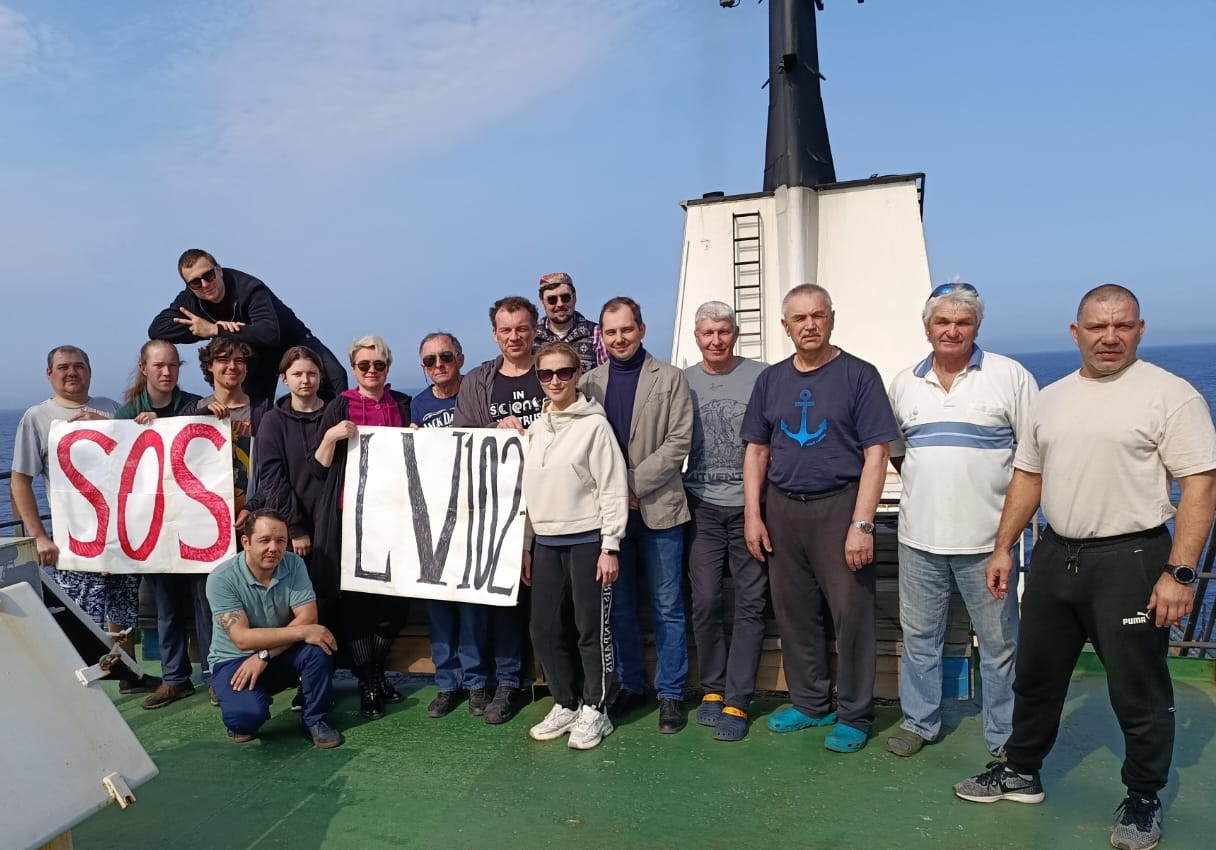
Participants of the 102nd cruise of RV Akademik M.A. Lavrentyev
During the expedition, the vessel covered more than 4,370 nautical miles. Over 3,560 linear miles of echo sounding and gravimetric survey, as well as 700 miles of magnetometric measurements, were completed. Bottom sediment sampling was conducted at 32 stations using gravity corers and a Box Corer, with the total length of the recovered cores exceeding 65 meters. A total of 375 sediment samples were collected for gas-geochemical studies, along with 155 surface water samples from the flow-through system. Additionally, microbiological plating and sample fixation were performed to analyze the taxonomic diversity of microbial communities.
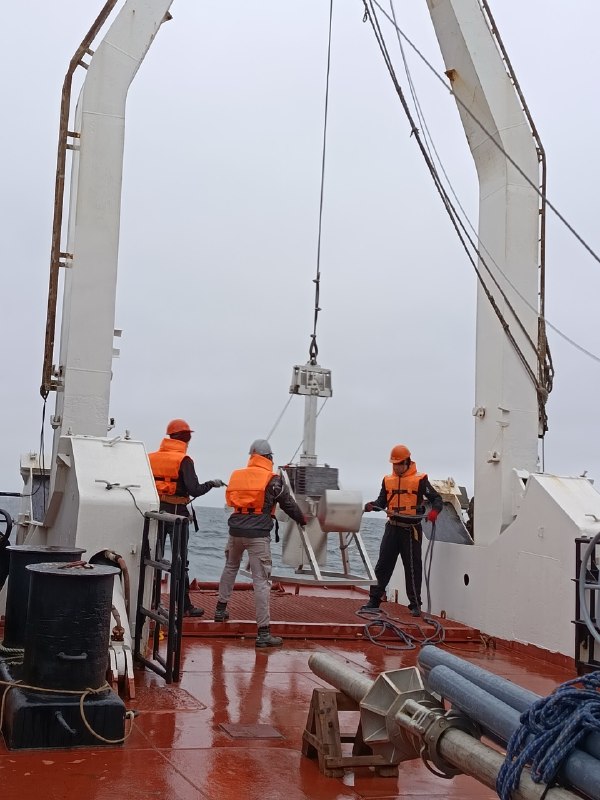
Bottom sediment sampling using a Box Corer
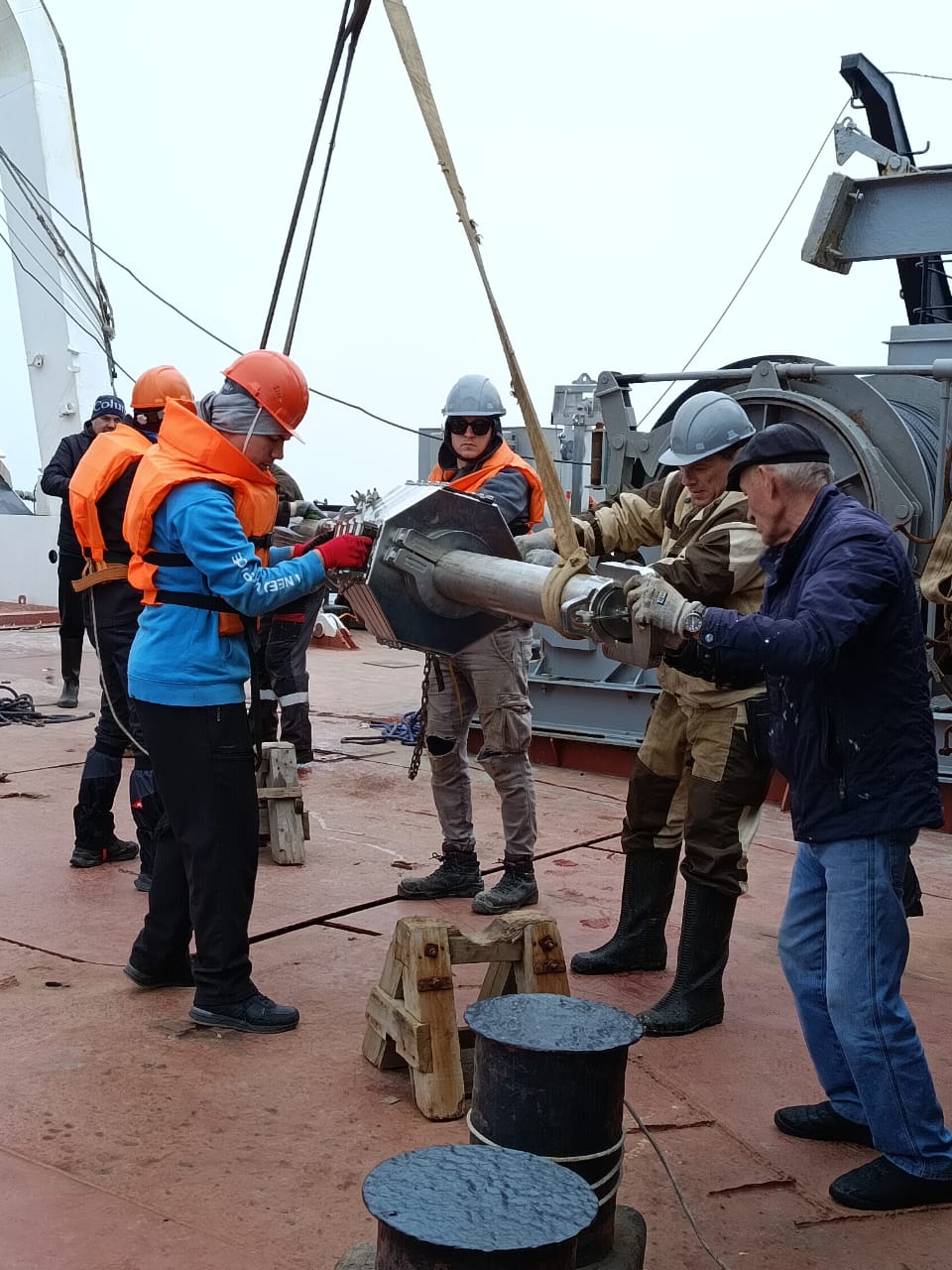
Retrieving a gravity corer with sediment sample on board
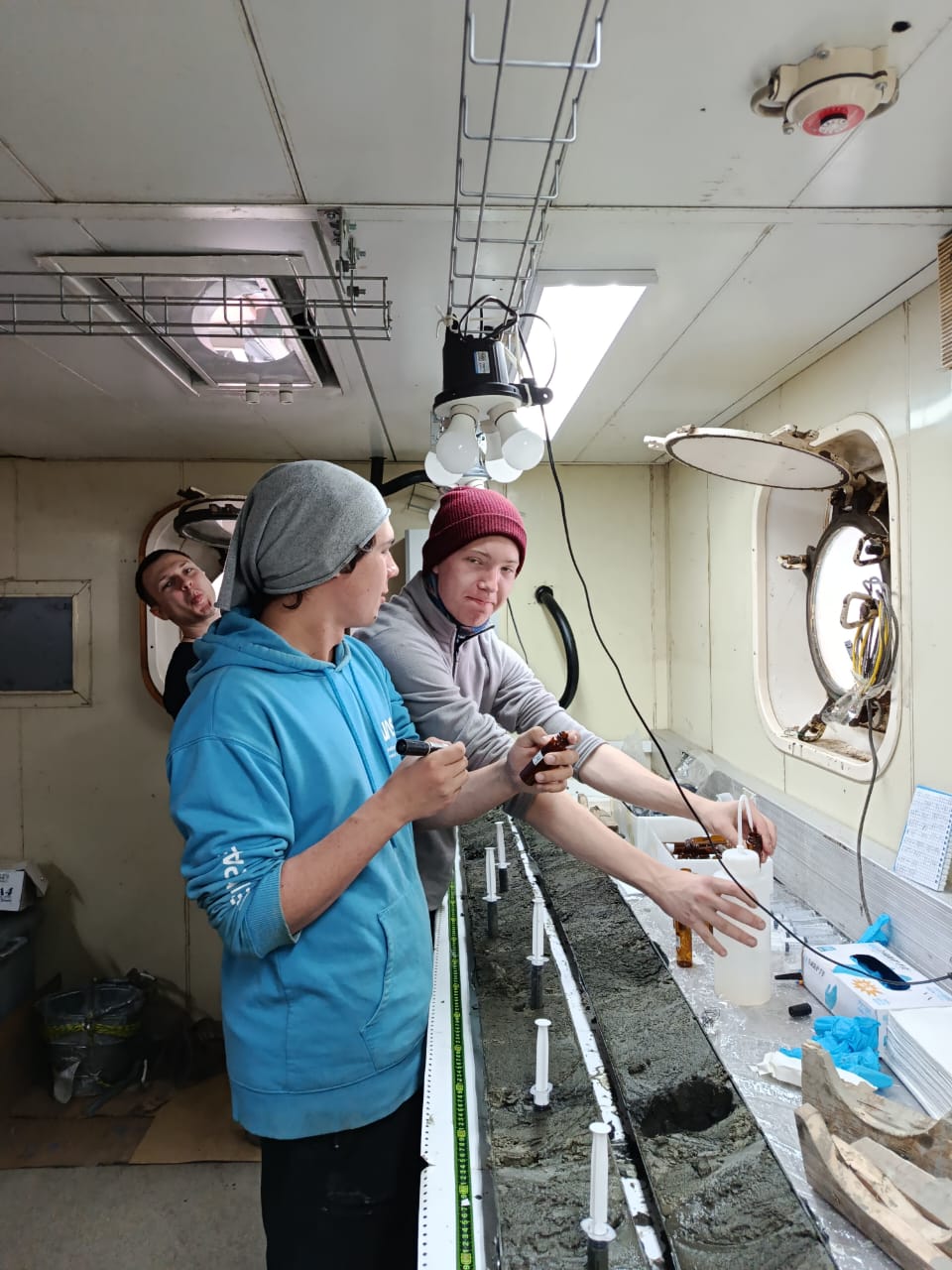
Sampling for gas-geochemical studies: FEFU students Kirill Pleshkov and Pavel Baluev, and Team Leader Pavel Zherdev
A preliminary analysis of the obtained data already allows for several significant conclusions. In the area of the Golygin Trough and within the dome structures near Paramushir Island, anomalous methane concentrations of up to 8.62 ml/L were identified in bottom sediments, which is several orders of magnitude higher than background values. Methane concentrations of up to 2.06 nM/L were recorded in the water column, which is 2 to 4 times higher than background levels and confirms the active migration of hydrocarbon fluids from the sedimentary sequence into the water. Furthermore, gas hydrate layers were discovered at station LV102-10GC at a depth of 350–357 cm below the seafloor. The predominance of methane over heavy hydrocarbons indicates a microbial genesis of the gases, which is characteristic of gas hydrate deposits.
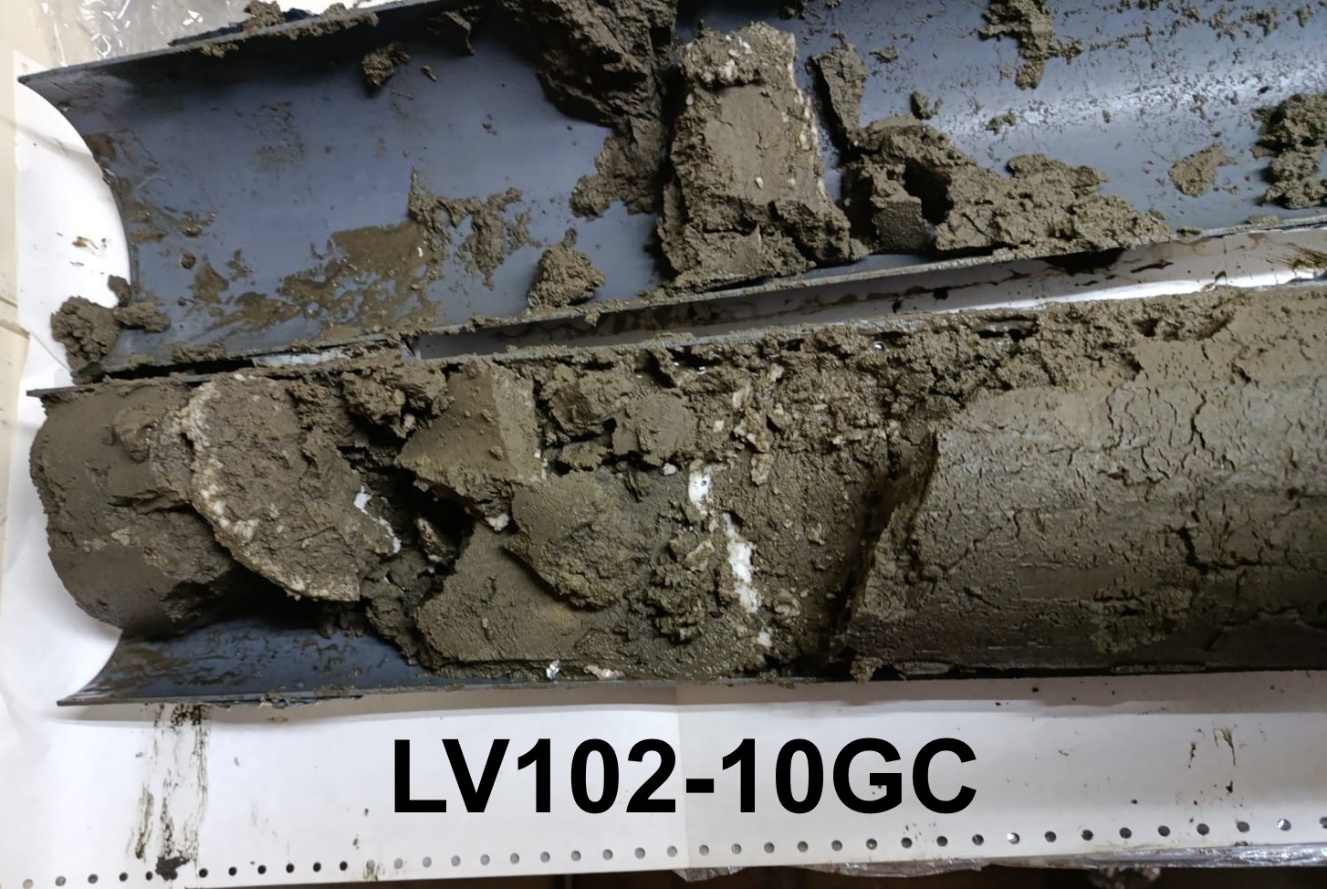
Gas hydrate interlayers and their isometric inclusions in the lower part of the core

Gas geochemist Evgeny Lifansky
Methanotrophic, sulfate-reducing, and oil-oxidizing microorganisms were identified in the sediment cores, and the presence of psychrophilic, mesophilic, and thermophilic sulfate-reducing bacteria was established. The collected samples of gas-saturated sediments will be further analyzed using the metabarcoding method for a detailed assessment of the taxonomic diversity of microbial communities.
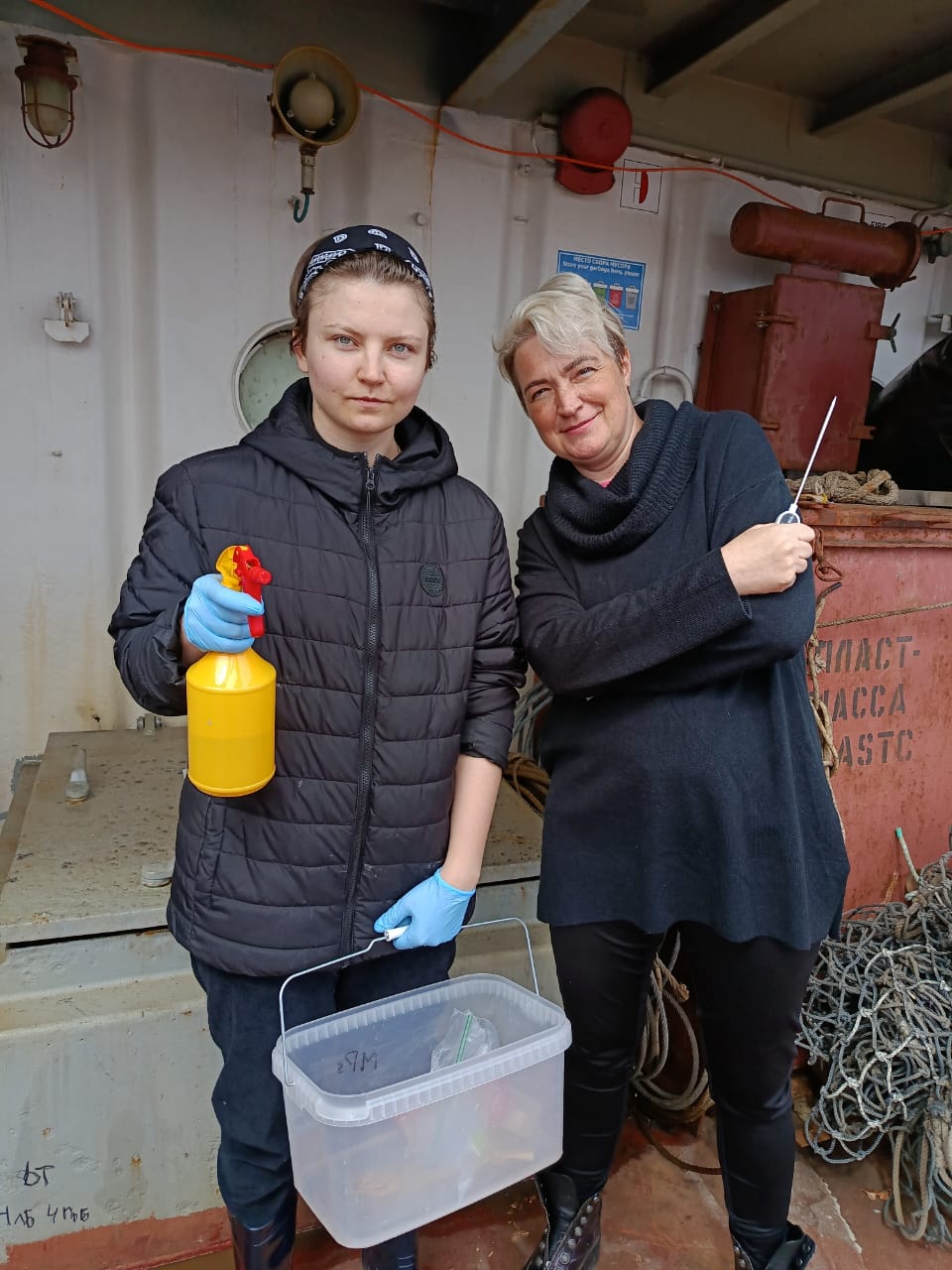
Microbiologists: Irina Isaeva and Yana Ryzhmanova
Geophysical surveys enabled the construction of gravity and magnetic field maps, which provide an opportunity to re-evaluate the block structure of the Earth's crust in the near-Paramushir area of the Sea of Okhotsk. A total of 53 GB of echo sounder data was recorded, revealing numerous acoustic anomalies interpreted as potential gas seeps near the seafloor. Notably, the near-Paramushir gas flare itself, well-known from previous studies, was not detected—its intensity likely changed following a series of powerful earthquakes in 2025.
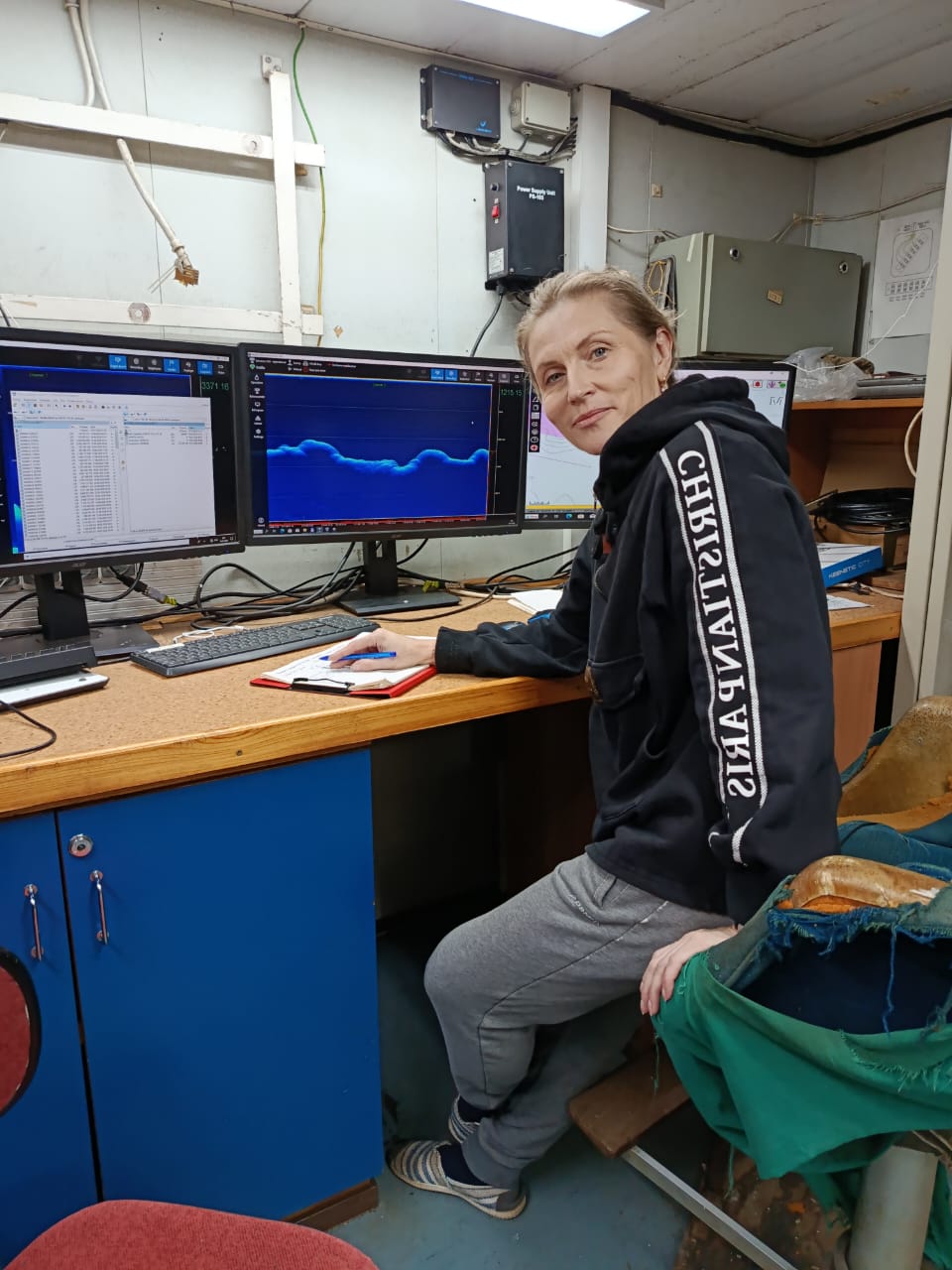
Geophysicist Zoya Proshkina at the echo sounder
The expedition confirmed the high scientific potential of the study area. Despite the forced reduction of the program (the research in the Sea of Japan had to be abandoned), the obtained material will form the basis of papers and reports, and will also be used to evaluate the gas hydrate potential of the northern termination of the Kuril Basin.
The expedition participants express their special gratitude to Captain A.P. Brazhnikov and the entire crew of RV Akademik M.A. Lavrentyev for their high professionalism, responsiveness, and coordinated actions under the difficult conditions of the emergency situation. Thanks to the captain's competent leadership and the selfless work of the crew, the scientific team managed to implement the research program to the maximum possible extent, despite the premature termination of the cruise. The crew demonstrated full readiness for unexpected situations and provided comprehensive assistance in deployment/recovery operations and sampling, which played a decisive role in obtaining significant scientific results.
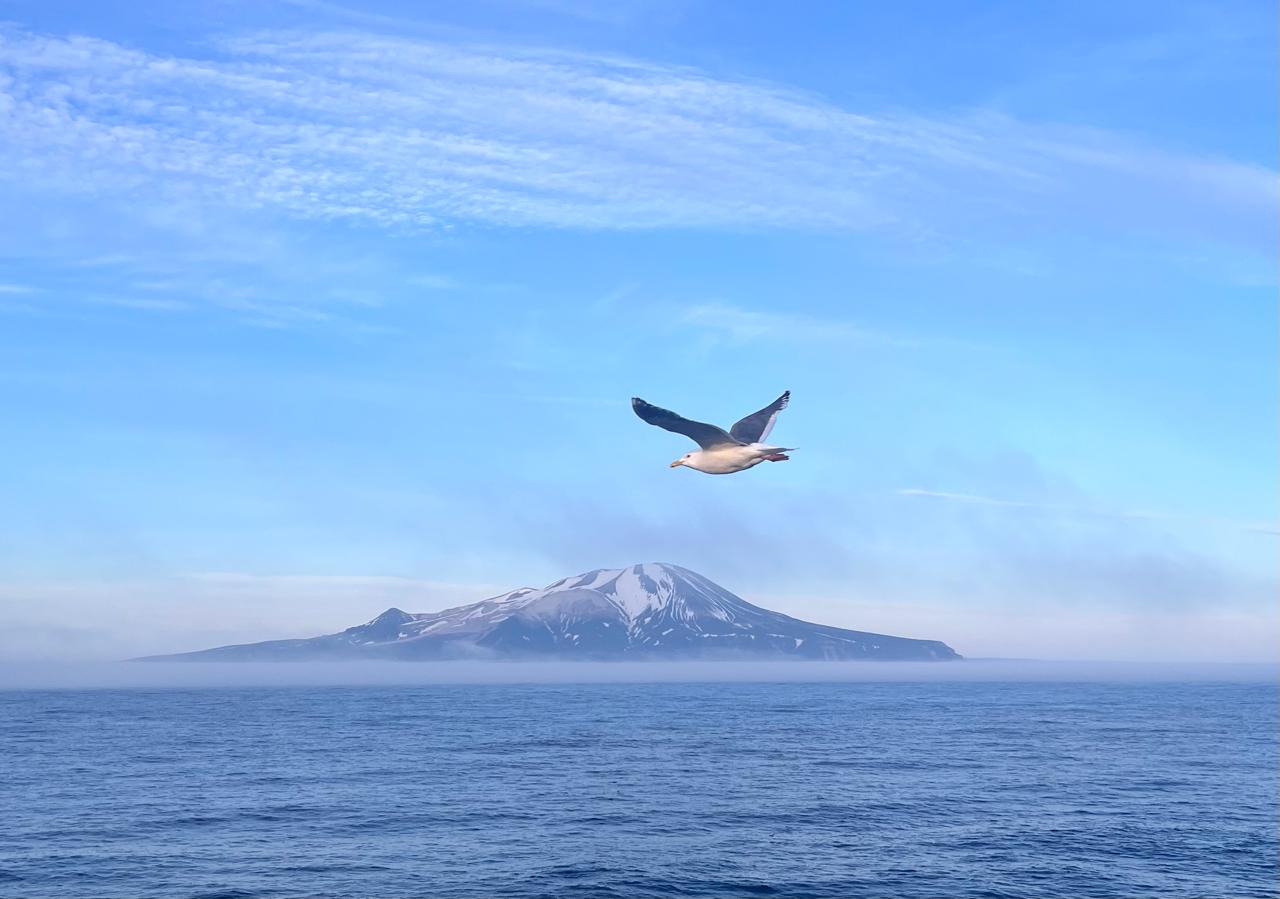
Kharimkotan Island in the Sea of Okhotsk